
You're Mourning Someone You're Not Allowed to Mourn
It happened again today. You caught a glimpse of yourself in a store window and paused, not recognizing the person looking back. Or maybe you found an old concert ticket, a photo from a girls' trip, a text thread full of inside jokes about things that used to matter. And something inside you ached.
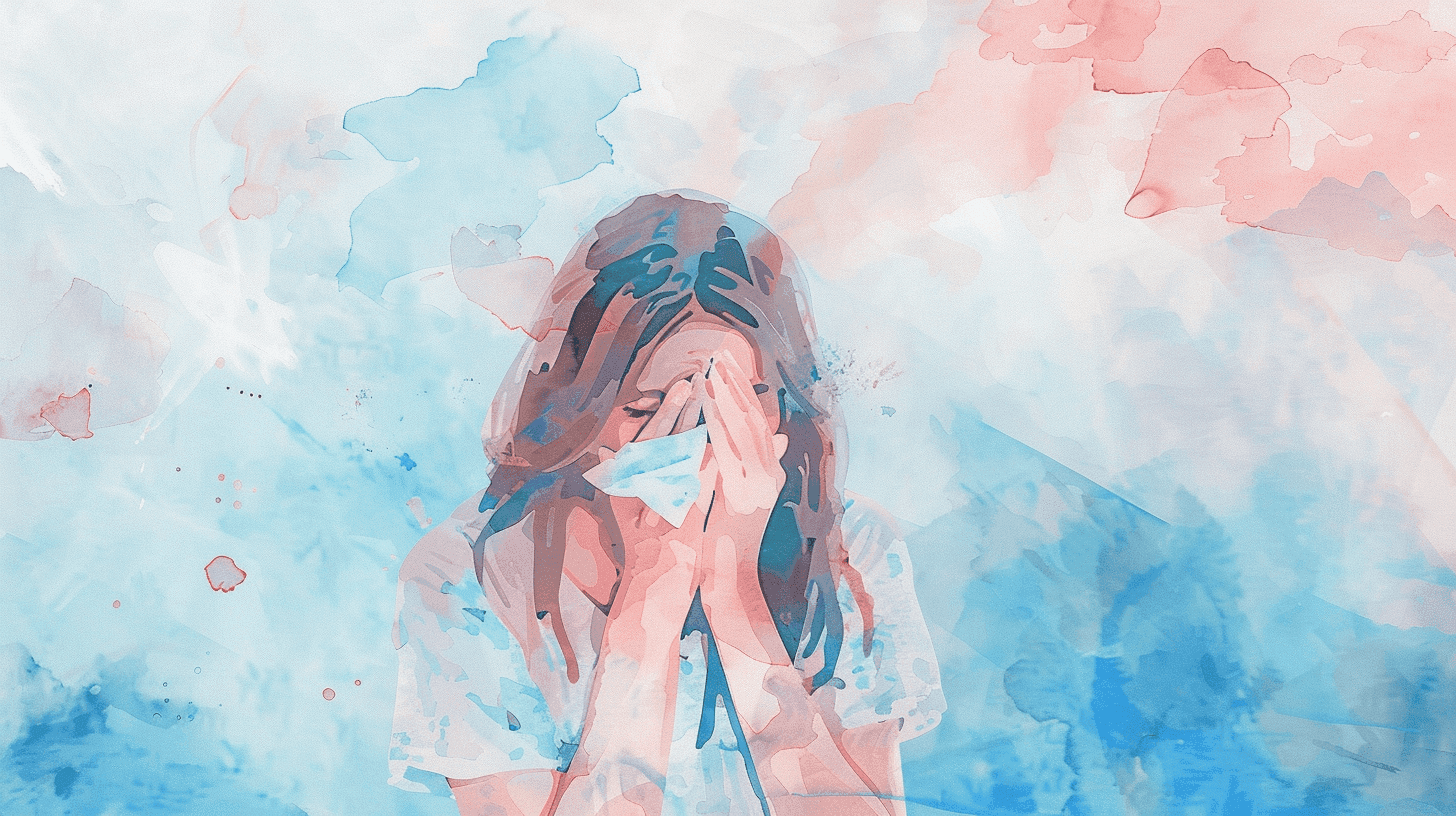
You're grieving. But you're not grieving a death. You're grieving a life. Your life. The one you had before everything changed.
The spontaneous dinners. The body that felt familiar. The career that defined you. The friendships that were easy to maintain. The relationship that had time and space to breathe. The person who knew exactly who she was.
She's gone. And no one sent flowers.
This grief is real, it's valid, and you're not ungrateful for feeling it. You're experiencing something that affects nearly every mother but rarely gets named: matrescence.
Matrescence: The Identity Transformation No One Talks About
In 1973, anthropologist Dana Raphael coined the term "matrescence" to describe the developmental transition of becoming a mother, comparable in scope and significance to adolescence. Just as teenagers undergo a complete reorganization of their identities, brains, and relationships, so do new mothers.
Yet while we expect adolescents to be confused, moody, and "finding themselves," we expect mothers to transition seamlessly into their new role. We allow teenagers identity crises; we judge mothers for them.
Dr. Aurélie Athan at Columbia University has dedicated her career to studying matrescence. Her research shows that the identity shift of motherhood involves changes in:
- Self-concept: Who you understand yourself to be
- Body relationship: How you perceive and inhabit your physical form
- Professional identity: Your relationship to work and achievement
- Social identity: Your friendships and community belonging
- Relational identity: Your role in romantic and family relationships
- Values and priorities: What matters most to you
This isn't a superficial adjustment. It's a fundamental reorganization of your entire sense of self.
The Losses Are Real
Let's name what you might be grieving, because naming it diminishes its power:
Your Body
The body that used to feel like yours now feels like a stranger. Pregnancy, birth, breastfeeding, and sleep deprivation have reshaped it in ways that may or may not be permanent. You might grieve your pre-baby weight, your pre-baby wardrobe, your pre-baby comfort in your skin.
Your Freedom
The ability to leave the house with just your keys and wallet. To sleep until you wake naturally. To decide at 7 PM that you want to see a movie. To have a sick day that's actually restful. Small freedoms you never knew you'd miss.
Your Relationship
The couple you used to be, the one that had long dinners, uninterrupted conversations, and sex that wasn't scheduled around nap times, has transformed. You may love your partner and still grieve the ease of what you had before.
Your Friendships
Friends without children don't understand why you canceled again. Friends with older children have forgotten how hard the early years are. You're caught between worlds, and some friendships may not survive the transition.
Your Career Identity
Maybe you're still working but your priorities have shifted. Maybe you left the workforce and wonder who you are without your job title. Either way, the professional identity you built has been disrupted.
Your Sense of Self
This is the deepest grief: not knowing who you are anymore. You used to have hobbies, interests, opinions that weren't about motherhood. Now it feels like "mother" has consumed every other identity you held.
Why Society Makes This Harder
We live in a culture that frames motherhood as pure gain. You gained a baby! You gained a family! You gained the most important role a woman can have!
With this framing, acknowledging loss becomes unacceptable. Saying "I miss my old life" gets heard as "I don't love my baby." Admitting "I don't know who I am" sounds like "I regret becoming a mother."
But here's the truth that psychology understands: grief and love coexist. You can adore your child AND mourn who you were before they arrived. These aren't contradictions. They're the complex reality of being human during a massive life transition.
The pressure to perform gratitude without acknowledging grief forces mothers to suppress legitimate emotional experiences. And suppressed grief doesn't disappear. It leaks out as resentment, numbness, anxiety, or depression.
You Can Love Your Baby AND Grieve Your Old Self
This is the central paradox of matrescence, and it needs to be said explicitly:
Missing your freedom doesn't mean you want to abandon your child. Grieving your career doesn't mean you made the wrong choice. Mourning your pre-baby relationship doesn't mean your partnership is failing. Feeling lost doesn't mean you're a bad mother.
Both things are true. Both things matter. Both things need space to be felt.
What Integration Actually Looks Like
The goal isn't to "get over" your old identity or to "get back to" who you were before. Neither is possible or healthy. The goal is integration, weaving who you were with who you're becoming into a new, expanded sense of self.
1. Name What You've Lost
You cannot grieve what you refuse to acknowledge. Make a list, if it helps. Write down the specific things you miss: sleeping in on Saturdays, your favorite jeans, spontaneous travel, being known as something other than someone's mother. Naming is the first step toward processing.
2. Allow Yourself to Feel It
Set aside time, even fifteen minutes, to actually feel the grief without judging yourself for it. Cry if you need to. Anger is allowed. Sadness is allowed. You don't need to fix or rush through these emotions.
3. Identify What You Want to Carry Forward
Which parts of your pre-baby identity are worth preserving? Maybe you used to run and want to get back to it. Maybe your creative practice matters to you. Maybe certain friendships are worth the effort of maintaining. Choose deliberately rather than letting everything slip away by default.
4. Explore Who You're Becoming
Matrescence isn't only about loss. It's also about growth. What new strengths have you discovered? What matters more to you now? What perspectives have shifted in ways that feel meaningful? The woman emerging from this transition isn't diminished. She's different.
5. Find Your People
Dr. Athan's research shows that mothers who navigate matrescence most successfully have communities of women who understand and validate the experience. This might be a mothers' group, an online community, a therapist, or friends who are in similar life stages. You need people who let you speak honestly.
6. Create Rituals for Both Grieving and Growing
Mark your transitions consciously. Some mothers find it helpful to create a ritual to honor their pre-baby selves, a symbolic goodbye. Others prefer rituals that welcome their emerging identity. There's no right way to do this; what matters is intentionality.
7. Practice Self-Compassion
Dr. Kristin Neff at the University of Texas has extensively researched self-compassion and found that treating ourselves with the same kindness we'd offer a friend significantly improves mental health outcomes. When you catch yourself in self-judgment about your identity struggle, pause and ask: What would I say to another mother feeling this way?
When Identity Crisis Becomes Something More
Some level of identity disruption is normal in new motherhood. But sometimes the struggle indicates something that needs clinical support:
- Persistent feelings of emptiness or numbness lasting more than a few weeks
- Loss of interest in almost all activities, including your baby
- Thoughts of harming yourself or wishing you didn't exist
- Severe anxiety about your adequacy as a mother
- Feeling like you're watching your life from outside your body
- Inability to complete basic daily functions
These symptoms may indicate postpartum depression, postpartum anxiety, or birth trauma, all treatable conditions. Getting support isn't a sign that you're failing at the transition; it's a sign that you're taking the transition seriously.
You Are Not Lost, You Are Becoming
The woman you were before your baby isn't gone. She's integrated into a larger, more complex version of herself. The spontaneity lover is now discovering a different kind of adventure. The career-focused achiever is now applying those same skills to the demanding work of raising a human. The person who knew exactly who she was is now brave enough to grow.
You're not lost. You're in transition.
And transitions, by definition, are uncomfortable. They involve letting go of one shore before you've reached the other. But you will reach the other side. Not unchanged. Integration doesn't mean returning to who you were. But whole. Complete. Yourself.
You have the right to grieve and grow at the same time. Both are part of becoming the mother you're meant to be.
At Bloom Psychology, we specialize in helping women navigate the identity transformation of matrescence. If you're struggling to find yourself in this new chapter, you don't have to figure it out alone.
Related Reading
- When Motherhood Isn’t Joyful—And That’s OK
- Breastfeeding Grief: When Weaning Is Emotionally Harder Than You Expected
- When Your Partner Doesn't Understand Your Postpartum Experience
If this named a grief you didn't have permission to feel—the version of yourself who's gone, unmourned—know that matrescence is a real developmental passage, not a failure to adjust. You can love your baby and grieve the woman you were before; that both/and is the truth most people skip. You don't have to reorganize your entire sense of self alone. Our new mom program was built for exactly this transition, and you can book a free consult to talk through where you are.